Zeitz Museum of Contemporary Art Africa – Cape Town, South Africa
A lecture by Micaela Antonucci and Gabriele Neri
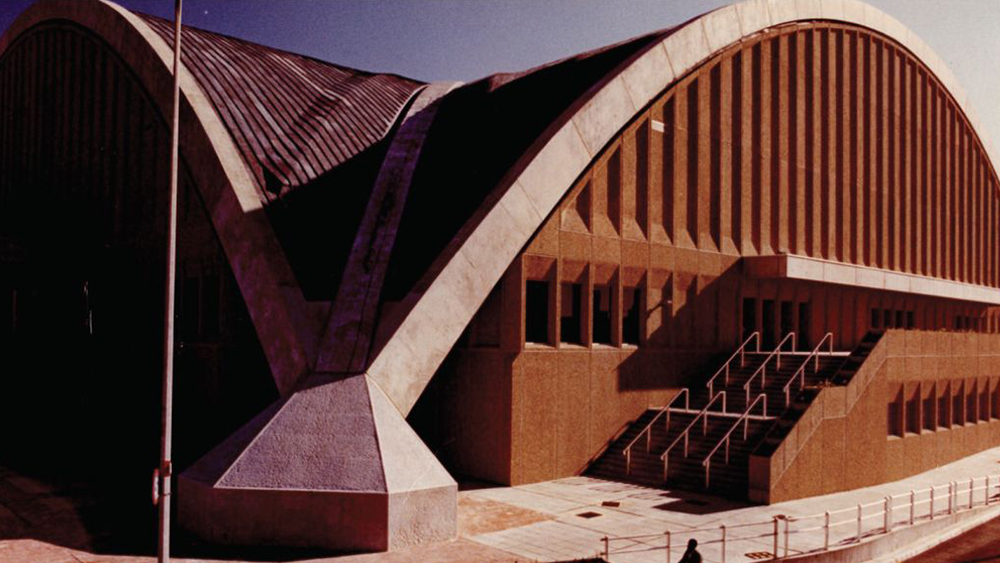
The aim of this lecture is to shed light on the Good Hope Centre in Cape Town, an exceptional building designed by the famous Italian engineer and architect Pier Luigi Nervi (1891-1979), who is internationally considered as one of the masters of 20th-century reinforced concrete structures. The first contacts between Nervi and the City of Cape Town started in 1964, but the project was approved in the following decade and was inaugurated in 1977. It offers various outstanding features. On the one hand, the Good Hope Centre is one of Pier Luigi Nervi’s last works, featuring some of his most famous building techniques and architectural forms: i.e. the precast concrete roof, which was at that time the largest concrete cross vault in the world. On the other hand, the building had also a social and political value: when it opened to the public, it was supposed to be open to all races, raising the issue of discrimination in the entertainment field and the problem of multiracial audiences.
Conceived by Pier Luigi Nervi at the end of his glorious career, in collaboration with his son Antonio, his office and local architects Colyn & Mering, the Good Hope Centre can be considered a remarkable example of Italian design from the 1960s and 1970s. Its shape was at the same time modern and linked to the greatest Italian architecture of the past: the Good Hope Centre’s roof is, in fact, part of a long-lasting process of reinterpretation of the cupola, a building typology that characterized the history of Italian architecture from the Pantheon to Brunelleschi, from Michelangelo to Borromini.
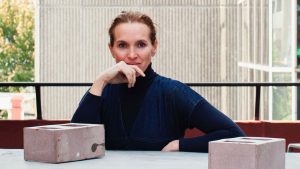
Micaela Antonucci, Architect, PhD, she is Assistant Professor in History of Architecture at the Alma Mater Studiorum – University of Bologna. Since 2014, she’s a member of the Board of the Reseach PhD in Architecture of the University of Bologna and Coordinator of the Publishing series of the Department of Architecture of Bologna. In 2014 she obtained the National Scientific Qualification to function as Associate Professor.
Gabriele Neri, Architect, PhD, he studied at the Milan Polytechnic and the FAUP of Porto (Portugal). Gained a PhD in History of Architecture and Urban Planning at the Polytechnic of Turin with a thesis on the Italian engineer Pier Luigi Nervi. He is Adjunct Professor of History of Design and Architecture at the Polytechnic of Milan (Italy) from 2011. He is researcher and teaching assistant at the Academy of Architecture of Mendrisio (Switzerland).
INFO: www.zeitzmocaa.museum























Zeitz Museum of Contemporary Art Africa – Cape Town, South Africa
A lecture by Micaela Antonucci and Gabriele Neri
The aim of this lecture is to shed light on the Good Hope Centre in Cape Town, an exceptional building designed by the famous Italian engineer and architect Pier Luigi Nervi (1891-1979), who is internationally considered as one of the masters of 20th-century reinforced concrete structures. The first contacts between Nervi and the City of Cape Town started in 1964, but the project was approved in the following decade and was inaugurated in 1977. It offers various outstanding features. On the one hand, the Good Hope Centre is one of Pier Luigi Nervi’s last works, featuring some of his most famous building techniques and architectural forms: i.e. the precast concrete roof, which was at that time the largest concrete cross vault in the world. On the other hand, the building had also a social and political value: when it opened to the public, it was supposed to be open to all races, raising the issue of discrimination in the entertainment field and the problem of multiracial audiences.
Conceived by Pier Luigi Nervi at the end of his glorious career, in collaboration with his son Antonio, his office and local architects Colyn & Mering, the Good Hope Centre can be considered a remarkable example of Italian design from the 1960s and 1970s. Its shape was at the same time modern and linked to the greatest Italian architecture of the past: the Good Hope Centre’s roof is, in fact, part of a long-lasting process of reinterpretation of the cupola, a building typology that characterized the history of Italian architecture from the Pantheon to Brunelleschi, from Michelangelo to Borromini.
Micaela Antonucci, Architect, PhD, she is Assistant Professor in History of Architecture at the Alma Mater Studiorum – University of Bologna. Since 2014, she’s a member of the Board of the Reseach PhD in Architecture of the University of Bologna and Coordinator of the Publishing series of the Department of Architecture of Bologna. In 2014 she obtained the National Scientific Qualification to function as Associate Professor.
Gabriele Neri, Architect, PhD, he studied at the Milan Polytechnic and the FAUP of Porto (Portugal). Gained a PhD in History of Architecture and Urban Planning at the Polytechnic of Turin with a thesis on the Italian engineer Pier Luigi Nervi. He is Adjunct Professor of History of Design and Architecture at the Polytechnic of Milan (Italy) from 2011. He is researcher and teaching assistant at the Academy of Architecture of Mendrisio (Switzerland).
INFO: www.zeitzmocaa.museum